Reading the Warning Signs
Retaining wall cracking often signals drainage, soil, or footing issues. Learn the usual causes and fixes, act now to prevent failure, and book an inspection with a trusted local pro. If you see new cracks, bulging, or a slight lean in your wall, you are looking at early signs of structural stress. The good news is that quick action can protect your yard, foundation, and safety. The team at Custom Concrete & Stone Design has over 30 years of experience solving these problems throughout Southeast Wisconsin, and we are here to help you understand what is happening and what to do next.
Why Retaining Walls Crack or Lean
Every retaining wall is fighting gravity and soil pressure. When design, drainage, construction, or maintenance fall short, stress builds and the wall starts to show distress. Retaining wall cracking is almost never random. It usually traces back to one or more predictable causes that we see often around Milwaukee and nearby counties.
Hydrostatic Pressure From Poor Drainage
Water is the most common culprit. When water accumulates behind a wall, it increases lateral pressure on the structure. This hydrostatic pressure pushes hard on the wall, which can cause horizontal cracks, bowing, or outright leaning. Without proper weep holes, drain tile, and clean backfill stone, even a well-built wall can struggle during heavy rain or snowmelt. In Wisconsin’s freeze season, trapped water expands as it turns to ice, which adds even more force.
Inadequate Footing or Base
A retaining wall is only as strong as the ground it stands on. If the base is too shallow, not compacted, or built on soft soil, portions of the wall can settle differently. That differential movement often reveals itself as vertical cracks, stepped cracks in block walls, or a forward tilt. The base should be deep enough to resist frost heave and should include a compacted layer of angular stone that drains well and supports the wall evenly.
Poor Backfill or Compaction
Backfill matters as much as the wall itself. Using dense, moisture-holding soils behind a wall is a recipe for retaining wall cracking. That soil swells when wet, shrinks when dry, and adds unnecessary weight. Proper backfill uses free-draining stone wrapped with geotextile to keep fines from clogging the system. Correct compaction, done in thin lifts, helps prevent future settlement and pressure spikes.
Freeze Thaw Stress in Wisconsin
Our local climate is tough on concrete and mortar. Repeated freeze thaw cycles can widen small hairline cracks and open gaps between units. Water seeps in, freezes, and pushes surfaces apart. Over time, spalling, surface scaling, and widening cracks develop. In the Milwaukee area, this is a frequent contributor to retaining wall cracking and is one reason our team selects materials and mixes that stand up to local weather.
Soil Type and Expansive Clays
Not all soil behaves the same. Expansive clays take in water and swell, then shrink during dry periods. That constant volume change puts repeated stress on a wall. Loose or uncompacted fills are also risky, since they can settle and transfer unexpected loads to the structure.
Overloading and Surcharges
Extra weight near the top of a wall increases lateral pressure. Common surcharges include parked vehicles, hot tubs, patios, sheds, and stacked materials near the edge. Even a fence post or heavy landscaping can focus loads at one point and invite cracking or leaning. Walls that were not engineered for these loads often fail prematurely.
Tree Roots and Vegetation
Large roots can wedge into joints, displace blocks, and fracture weaker mortar. Dense plantings against the wall can also trap moisture, which adds to hydrostatic pressure. Smart planting that keeps large trees farther away helps reduce this risk.
Material or Workmanship Issues
Insufficient reinforcement, weak mortar, low cement content, incorrect block type, or poor unit alignment can all lead to retaining wall cracking. Control joints may be missing in long concrete walls. Rebar may be absent where it is needed. Inadequate geogrid length in segmental block walls is a common oversight that limits stability.
Age and Maintenance Gaps
Even a well-built wall needs occasional care. Clogged weep holes, silted drain tile, or a broken downspout can overwhelm a system over the years. If your wall is older, what looks like cosmetic cracking may be a sign that maintenance is overdue.
Common Signs of Retaining Wall Cracking and Distress
- Horizontal cracks at mid height, often linked to hydrostatic pressure and bowing
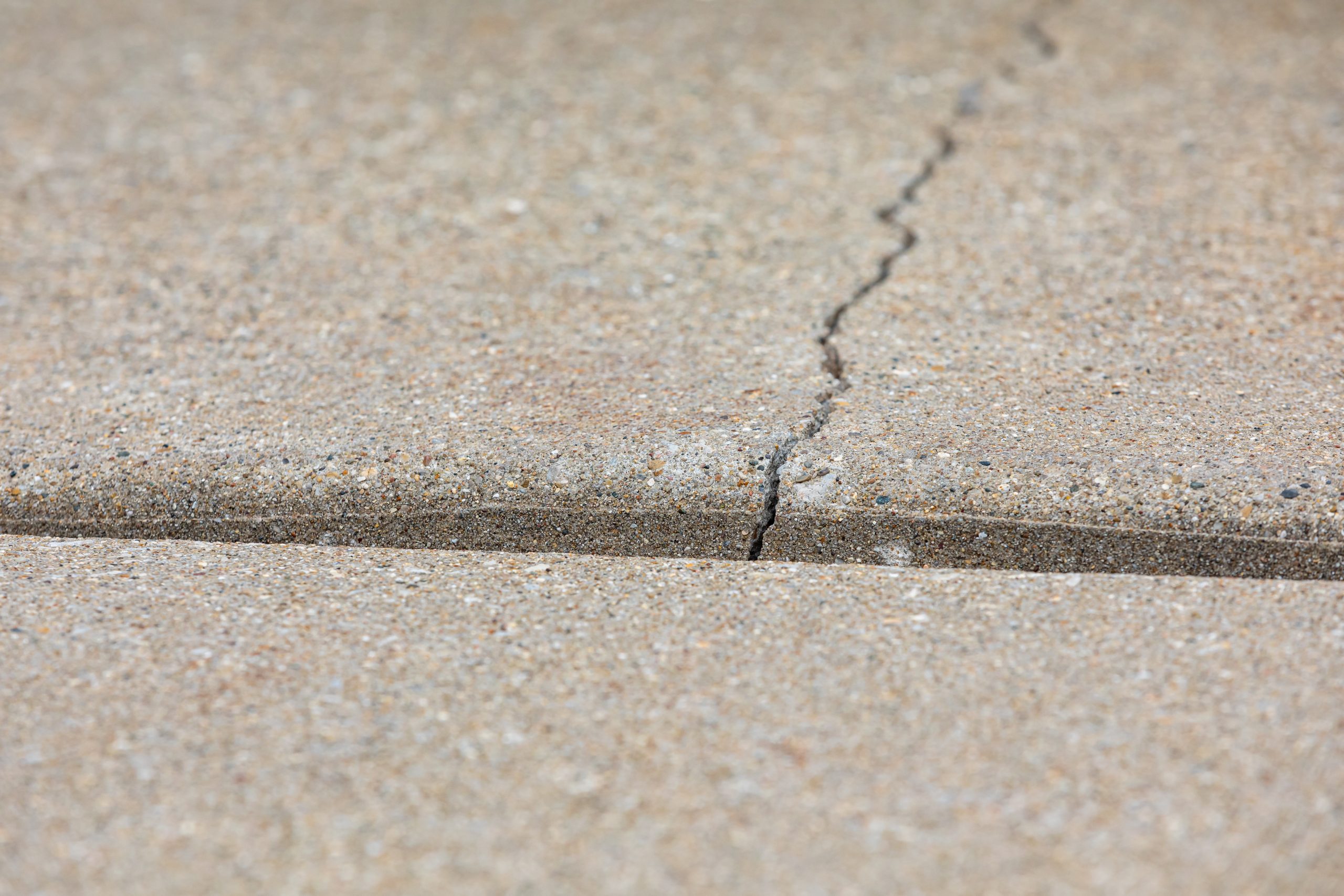
- Vertical cracks that start narrow and widen with height, a sign of footing or settlement issues
- Stepped cracks following mortar joints in block or brick walls
- Bulging or bowing along a section, often with mortar separation
- A noticeable lean forward or backward when viewed from the side
- Gaps between wall units or missing mortar chunks
- Efflorescence or white staining that signals water movement through the wall
- Spalling, scaling, or flaking surfaces from freeze thaw stress
- Water pooling behind or at the base of the wall after rain
- Sunken soil or depressions near the top of the wall
What To Do When You See Retaining Wall Cracking
- Document the issue. Take clear photos, measure crack width if possible, and note changes after heavy rain.
- Reduce loads near the wall. Move vehicles, stacked materials, or heavy planters away from the edge.
- Divert water now. Extend downspouts, clear gutters, and gently regrade topsoil to shed water away from the wall.
- Do not excavate behind the wall on your own. Removing soil can destabilize the structure and trigger sudden movement.
- Schedule a professional inspection. A qualified contractor can assess the cause, check drainage, and recommend a safe plan. In Southeast Wisconsin, Custom Concrete & Stone Design offers prompt, detailed assessments.
Repair Options That Actually Work
The right fix depends on the wall type, height, soil conditions, and the exact cause of the distress. Here are proven paths we use to resolve retaining wall cracking and related issues.
Drainage Upgrades
- Perforated drain tile with proper outlet. Installing perforated pipe at the base of the wall allows water to escape. We connect to a daylight outlet or sump where needed.
- Clean, angular backfill stone. Free-draining stone behind the wall reduces hydrostatic pressure. Geotextile helps keep fines out of the stone.
- Weep holes. Adding or reopening weep holes on some wall types gives trapped water a direct exit path.
- Surface water control. Correct grading, downspout extensions, and swales keep water from flowing toward the wall.
Structural Reinforcement
- Geogrid layers. For segmental block walls, geogrid extends back into the soil and locks the wall and soil mass together. This increases stability and reduces bowing.
- Helical tiebacks or soil anchors. Anchors driven into stable soil behind the wall can restrain movement and support taller walls.
- Deadman anchors for timber replacement projects. For older timber walls, properly designed deadmen help resist pullout and leaning.
- Rebar and concrete infill. For block walls, grouting cells and adding reinforcement can stiffen the structure.
Rebuilding With Proper Engineering
If damage is significant, rebuilding is often safer and more cost effective over time. A proper rebuild includes a compacted stone base below frost depth, correct wall batter or setback, engineered drainage, geogrid design for the wall height, and attention to local load conditions. Custom Concrete & Stone Design follows best practices for each specific wall system and soil condition to prevent future retaining wall cracking.
Crack Repair Methods
- Epoxy injection for structural concrete cracks. This can restore strength when movement has stabilized.
- Polyurethane injection for non-structural, leaking cracks. Flexible sealants accommodate minor movement and stop water intrusion.
- Tuckpointing and repointing for masonry. Replacing failed mortar tightens the wall and limits water pathways.
- Partial rebuilds. In some cases, rebuilding only the most distressed section with improved drainage solves the problem safely.
- Control joint additions. Long concrete walls benefit from properly spaced joints to manage natural shrinkage and thermal movement.
Soil and Site Corrections
- Regrading the slope above the wall to prevent runoff concentration
- French drains or swales to redirect water away from the wall face
- Top cap sealing to limit surface infiltration into the wall core
- Replacing expansive clay backfill with granular material where feasible
When Replacement Is Wiser
Replacement is usually the right call when the wall is leaning significantly, bulging beyond recoverable limits, or when the foundation has failed. If the wall lacks any drainage system, is severely cracked across multiple sections, or cannot support planned surcharges, a rebuild with proper design will give the best long term result.
How Custom Concrete & Stone Design Evaluates and Fixes Retaining Walls
Custom Concrete & Stone Design is a Milwaukee based contractor with more than 30 years of residential and commercial concrete experience. We serve Milwaukee, Waukesha, Ozaukee, Washington, Racine, and Kenosha counties. Our process is clear, careful, and focused on preventing future retaining wall cracking.
- Site visit and evaluation. We measure lean, check crack patterns, look for bowing, and identify water sources.
- Soil and drainage review. We assess backfill type, compaction, and find out how water moves through the site.
- Load and surcharge check. We note driveways, patios, fences, slopes, or trees that may increase pressure.
- Plan and pricing. We present options that match your goals and budget, from targeted repairs to full rebuilds. We explain the tradeoffs clearly so you can choose with confidence.
- Permits and engineering. For taller walls or complex sites, we coordinate with engineers and handle permits as required by local codes.
- Quality build. We use top materials and proven methods, then stand behind the work.
Our Build Standards
- Compacted stone base to resist settlement and frost action
- Drain tile with fabric wrap and cleanouts when needed
- Free draining backfill and geotextile separation
- Proper wall batter or setback for stability
- Geogrid design matched to wall height and soil conditions
- Quality concrete mixes, reinforcement where required, and correct jointing
- Freeze thaw aware details that help our work last in Wisconsin weather
Materials We Work With
We repair and build poured concrete walls, segmental block walls, natural stone walls, and we replace aging timber walls with modern systems that stand up better to moisture and time. Since Custom Concrete & Stone Design also builds patios, driveways, stamped concrete features, foundations, garages, and more, we are able to coordinate your wall project with other site improvements for a consistent finish.
Cost Factors and Timelines
Costs vary based on wall height, length, access, soil conditions, drainage requirements, and whether reinforcement or anchors are needed. Adding geogrid, helical tiebacks, or extensive drainage increases complexity but often prevents future failure. Small drainage fixes can be completed in days. Larger rebuilds may run one to two weeks depending on weather and site constraints. During your inspection, we explain the options and provide a clear, detailed estimate so there are no surprises.
Preventing Retaining Wall Cracking From Day One
- Design for your site. Soil type, slope, and expected loads should drive the wall design.
- Do not skimp on drainage. Install drain tile, free draining stone, and weep holes where appropriate.
- Use proper backfill. Avoid heavy clay behind the wall. Choose angular stone and compact in thin lifts.
- Respect height limits. Taller walls often need geogrid or anchors. Get engineering when walls exceed local thresholds.
- Control surface water. Extend downspouts and keep grading sloped away from the wall.
- Plan for freeze thaw. Choose materials and details that handle Wisconsin’s climate.
- Schedule regular checkups. Clear weep holes, inspect after big storms, and address small issues early.
FAQs About Retaining Wall Cracking
Is every crack an emergency?
No. Hairline cracks from initial shrinkage in concrete are common. Concern rises when cracks widen over time, run horizontally, or combine with bowing or leaning. A professional inspection can tell the difference.
Can I fill cracks and be done?
Sealants and injections can stop leaks and improve appearance, but they do not resolve underlying causes like hydrostatic pressure or poor footing. The root issue must be corrected to prevent new damage.
How tall can my wall be without engineering?
Local codes vary, but many areas require engineering for walls above a certain height or when surcharges are present. Custom Concrete & Stone Design will advise based on your municipality’s rules and your site conditions.
What if my wall is leaning but not cracked?
A lean without cracking still indicates movement and stress. Timely reinforcement or drainage improvements may stabilize the wall and prevent future retaining wall cracking.
Do you work through winter?
Some repairs and inspections can be done year round. Rebuilds may be scheduled around freeze periods to ensure proper compaction and curing. We will plan the project for the best results in our climate.
Get a Professional Inspection in Southeast Wisconsin
If your retaining wall is leaning, bowing, or showing retaining wall cracking, do not wait. Small problems often grow fast when water and freeze thaw are involved. Custom Concrete & Stone Design has helped homeowners and businesses across Milwaukee, Waukesha, Ozaukee, Washington, Racine, and Kenosha for more than three decades. We combine top quality materials, skilled craftsmanship, and thoughtful design to deliver safe and lasting walls. Contact our team to schedule your inspection, review a clear plan, and get your wall back on solid ground.
From stamped concrete patios and driveways to foundations and retaining walls, Custom Concrete & Stone Design brings the experience and care your property deserves. Let us find the cause, fix it right, and prevent future retaining wall cracking so you can enjoy your space with confidence.