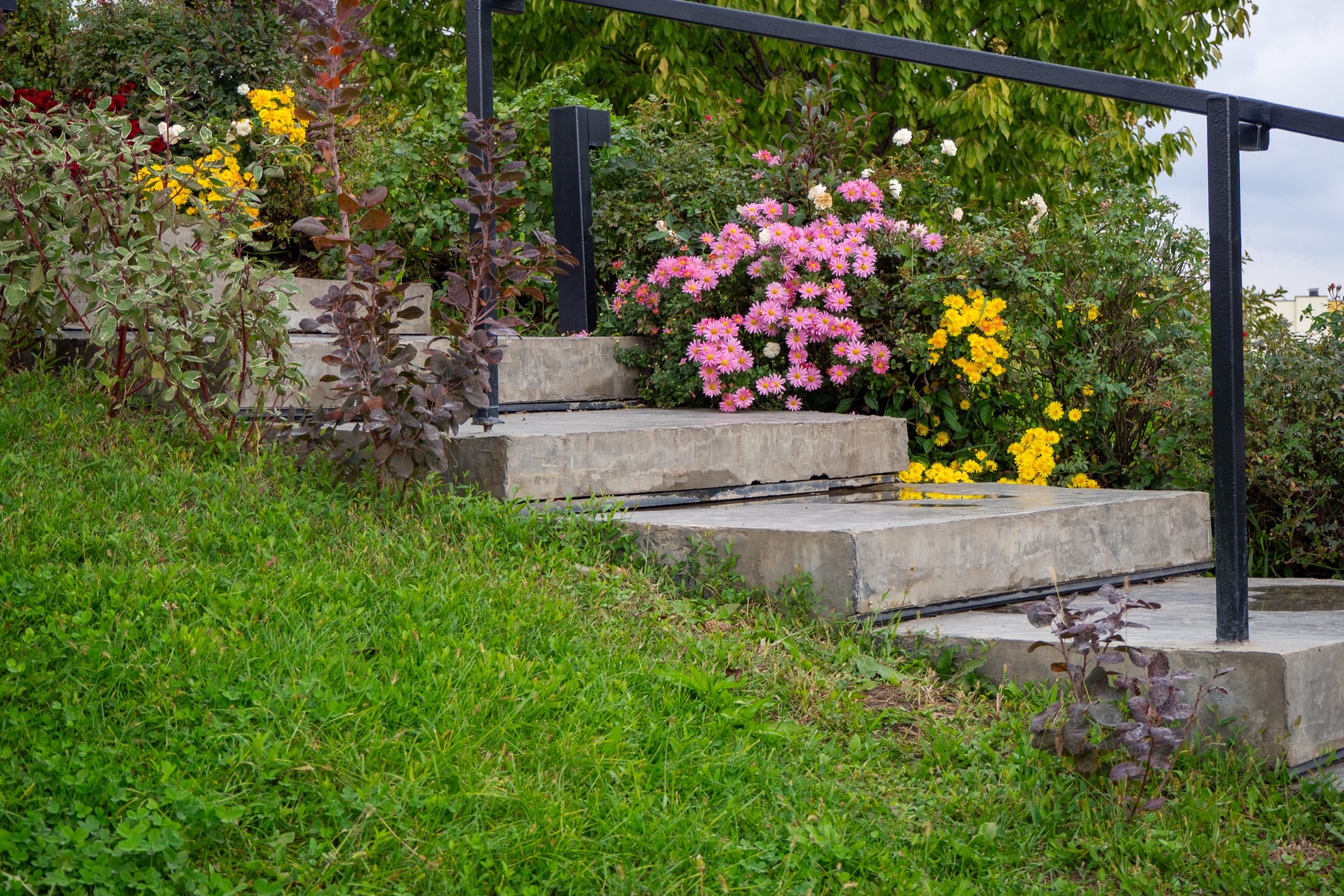
Concrete stair cracks can signal serious structural issues. Learn the warning signs, when to repair, and how to prevent damage. Schedule an expert inspection today with Custom Concrete & Stone Design. If you notice cracking on your steps, you are not alone. Concrete is strong, but it still moves and reacts to weather, moisture, and loads. Some cracks are harmless and easy to fix. Others can mean deeper problems that affect safety and property value. This guide explains what to look for, how to tell cosmetic from structural cracks, and the best repair options for homes and businesses in Southeast Wisconsin.
Why Concrete Stair Cracks Happen
Concrete expands and contracts as temperature and moisture change. It also settles as the ground beneath it moves. Over time, these natural forces can create concrete stair cracks. The key is understanding what caused the crack and whether it threatens the integrity of the stairs. A crack that formed from normal shrinkage may only need a simple seal. A crack from soil settlement or corroding rebar may require more serious repair.
Common causes in Southeast Wisconsin’s climate
- Freeze and thaw cycles. Water enters small pores and cracks, then freezes and expands. Repeated cycles widen cracks and break edges.
- Deicing salts. Chlorides speed up freeze-thaw damage and can corrode steel reinforcement.
- Poor drainage. Standing water near stairs saturates the soil, weakens support, and feeds crack growth.
- Soil settlement or heaving. Expansive soils and uneven compaction can shift steps out of level.
- Heavy loads and vibration. Frequent traffic, moving equipment, or nearby construction creates stress.
- Rebar corrosion. Steel expands as it rusts, leading to spalling and splitting cracks along reinforcement.
- Age and wear. Over decades, small defects grow and surfaces lose binder strength.
- Improper mix or finishing. Too much water in the mix, poor curing, or finishing during bleed water can make concrete weaker.
Cosmetic vs Structural: How to Tell the Difference
Not all cracks are equal. Some are only surface level. Others run deep or show that the stairs are moving. Use the guidelines below to get a general idea. Then have an expert confirm the cause and best fix. Catching trouble early can save time and money and improve safety.
Cracks that are usually cosmetic
- Hairline cracks under 1/16 inch wide with no change in elevation. These often come from normal shrinkage.
- Surface crazing that looks like a fine web pattern. It affects only the top paste layer.
- Short, tight cracks at the edges that do not continue into the body of the step.
- Cracks that do not expand through seasons and show no chipping or flaking.
Cracks that may signal structural trouble
- Cracks wider than 1/8 inch or those that grow over time. Widening often means ongoing movement.
- Horizontal cracks across the riser or tread that align with reinforcement. This can indicate rebar corrosion or stress.
- Diagonal cracks starting at corners or sides that extend down through the stair. Diagonal movement may reflect settlement.
- Stair-step cracks that follow masonry joints on adjacent walls or landings. These often point to foundation movement.
- Cracks with height difference between sides. Any lip or offset is a tripping hazard and may show slab displacement.
- Cracks accompanied by spalling, flaking, or hollow sounds when tapped. These signs suggest delamination or freeze-thaw damage.
- Rust stains or damp areas along a crack. This may reveal active moisture intrusion and steel corrosion.
Safety Risks You Should Not Ignore
Even small concrete stair cracks can create hazards if they catch shoes or become slippery. Larger cracks bring bigger risks, especially in winter. When in doubt, do not wait. An inspection can determine if your stairs are safe to use and help you avoid injuries or liability.
- Trip and fall risk from uneven treads or flaking edges.
- Water infiltration that freezes and widens cracks in cold weather.
- Weakening of handrail posts if the base is cracked or loose.
- Structural instability if underlying soil has shifted or concrete has delaminated.
- Liability exposure for businesses and landlords due to unsafe egress routes.
When to Repair Concrete Stair Cracks
Timing matters. Early repairs are less invasive and more affordable. If you notice changes after a freeze or heavy rain, take action soon to prevent more damage. Below is a simple timeline to guide your next step.
Repair timeline
- Immediate action: Cracks with height offsets, loose pieces, or steps that rock when weight is applied. Rope off the area and call a professional.
- Repair soon: Cracks wider than 1/8 inch, diagonal or horizontal cracks, rust stains, or recurring cracks after past repairs.
- Monitor briefly then plan: Stable hairline cracks with no movement or moisture signs. Mark the ends and check monthly for growth.
DIY vs professional repair
For small, stable cracks, a careful homeowner can seal and patch. Beyond that, professional work is best to ensure long-term performance and code compliance. Custom Concrete & Stone Design offers no-pressure inspections and clear repair plans, so you know exactly what is needed and why.
- DIY is reasonable for hairline surface cracks. Use a quality concrete crack sealant and follow prep steps.
- Call a pro for any crack with movement, water intrusion, spalling, or rebar exposure. Specialized materials and methods are required.
- Commercial and multifamily stairs should be handled by licensed professionals to meet safety codes and maintain egress standards.
Proven Repair Options for Concrete Stair Cracks
There is no one-size-fits-all fix for concrete stair cracks. The correct method depends on cause, crack size, depth, location, and whether reinforcement or subgrade issues are involved. An experienced contractor will diagnose the root problem and propose a repair that restores strength and improves safety.
Surface repairs and aesthetic refresh
- Cleaning and routing. Remove debris, dust, and weak edges. Slightly widen tight cracks for better bonding.
- Polymer-modified patching. Flexible, high-bond mortars rebuild chipped nosings and fill shallow cracks.
- Crack sealing. Elastomeric or urethane sealants accommodate movement and keep water out.
- Resurfacing. A thin-bond overlay can renew worn treads and unify the look after patching.
- Non-slip finishes. Add texture or grit to improve traction in wet or icy conditions.
Structural stabilization and reconstruction
- Epoxy injection. High-strength epoxy can weld certain structural cracks and restore continuity, typically on dry cracks.
- Polyurethane injection. Flexible foams seal active leaks and accommodate slight movement, ideal for damp cracks.
- Partial step rebuild. Remove damaged concrete, treat or replace corroded rebar, and recast the affected area.
- Full stair replacement. Required when settlement is severe, reinforcement is broadly compromised, or stairs are undersized by code.
- Subgrade improvement. Compaction, base replacement, or helical piers can stop movement where soil is the cause.
- Handrail post reset. Re-anchor or replace posts into sound concrete with proper embedment and corrosion protection.
Drainage and waterproofing upgrades
- Regrade around stairs so water sheds away.
- Add gutters, downspout extensions, or splash blocks to redirect roof runoff.
- Install a French drain or trench drain where pooling occurs.
- Apply penetrating sealers to reduce water absorption and salt damage.
The Custom Concrete & Stone Design Approach
Custom Concrete & Stone Design is a Milwaukee-based company with more than 30 years of experience serving homeowners and businesses across Southeast Wisconsin. Our team delivers high-quality concrete work for stairs, patios, stamped concrete, driveways, retaining walls, garages, basements, foundations, and more. We combine top materials with skilled craftsmen to create custom solutions that match your property and budget. When it comes to concrete stair cracks, we focus on accurate diagnosis, durable repairs, and clear communication at every step.
What to expect during an inspection
- Consultation. We listen to your concerns, review history, and discuss how the stairs are used.
- Visual assessment. We examine crack patterns, measure widths, and check for offsets, spalling, and moisture.
- Root cause review. We evaluate drainage, soil conditions, and reinforcement exposure. We may tap test for hollow areas.
- Recommendations. We explain the findings in plain terms and outline repair options with pros and cons.
- Written estimate. You receive a detailed scope, materials list, and timeline so there are no surprises.
- Scheduled repair. Our crew arrives on time, protects surrounding areas, and completes work to spec.
Service areas
We proudly serve Milwaukee, Waukesha, Ozaukee, Washington, Racine, and Kenosha counties. If you are in Southeast Wisconsin and dealing with concrete stair cracks, Custom Concrete & Stone Design is ready to help.
Codes, permits, and safety
Stair repairs must meet building codes for rise, run, handrail height, and slip resistance. As a professional contractor, Custom Concrete & Stone Design handles permits and ensures compliance. We build safety into every job, from proper temporary barriers during work to durable finishes that stand up to Wisconsin winters.
Costs, Timelines, and What Affects Your Budget
Pricing depends on the complexity of the issue and the chosen repair method. Simple seal-and-patch work is more affordable, while structural fixes or full rebuilds cost more. Addressing drainage at the same time can protect your investment and reduce future expenses. A site visit is the best way to get an accurate quote.
- Scope of damage. Wider, deeper, or multiple cracks add labor and materials.
- Cause and location. Active movement, water intrusion, or rebar corrosion demands specialized methods.
- Access and logistics. Tight spaces, high steps, or commercial settings can extend the timeline.
- Finishes and features. Decorative resurfacing, color matching, or added non-slip textures affect cost.
- Season and weather. Cold temperatures and precipitation influence scheduling and curing times.
Most small to moderate repairs can be completed in one to three days, plus curing time. Larger reconstruction or replacement projects may take a week or more, depending on permitting and weather. Custom Concrete & Stone Design will provide a clear schedule so you can plan around the work.
How to Prevent Future Concrete Stair Cracks
Prevention and maintenance pay off. With the right care and timely repairs, concrete stairs can serve you well for decades.
- Seal concrete every 2 to 3 years with a quality penetrating sealer to reduce water and salt absorption.
- Improve drainage so water cannot pool at the base of the stairs or along landings.
- Avoid deicing salts when possible. Use sand or calcium magnesium acetate instead of rock salt.
- Clear snow early to reduce freeze-thaw stress. Use plastic shovels to avoid chipping edges.
- Keep downspouts extended and direct runoff away from stairs.
- Maintain caulking at joints between stairs, landings, and adjacent walls.
- Monitor small cracks. Mark their ends and note the date. If they grow, schedule an inspection.
- Address nearby tree roots and vegetation that can lift concrete or trap moisture.
- Ensure handrail posts are sealed at the base to keep water out of anchor points.
FAQs About Concrete Stair Cracks
Are hairline cracks normal?
Yes, many concrete stairs develop hairline cracks as the material cures and shrinks. If they are tight, stable, and not linked to other problems like spalling or moisture, they are usually cosmetic. Sealing them can keep water out and prevent growth.
Should I seal cracks before winter?
Yes. Sealing cracks before freeze-thaw season is one of the best ways to limit damage. A good sealant keeps water and deicing chemicals from entering the crack, which reduces expansion and spalling. Custom Concrete & Stone Design can help you choose products that perform in our climate.
Can I use salt on my concrete stairs?
Salt is hard on concrete. It speeds up freeze-thaw damage and can corrode steel reinforcement. Consider sand for traction or use a concrete-safe deicer such as calcium magnesium acetate. Always read labels and rinse residues in spring.
Will an overlay fix everything?
An overlay can refresh the surface and hide minor blemishes, but it will not solve structural issues or active movement. If the cause of the concrete stair cracks is settlement or rebar corrosion, the root problem must be fixed before any overlay.
How long do repairs last?
With proper diagnosis, quality materials, and good drainage, repairs can last many years. The life of the repair depends on climate exposure, usage, and maintenance. Custom Concrete & Stone Design focuses on long-term solutions and provides guidance to extend the life of your stairs.
Why Choose Custom Concrete & Stone Design
Choosing the right contractor matters. With over 30 years of experience, Custom Concrete & Stone Design brings deep knowledge of local soils and weather. We use top-quality materials, follow best practices, and provide custom designs for homes and businesses. From simple patching to full stair replacement, we tailor the solution to your needs and budget. Our reputation across Milwaukee, Waukesha, Ozaukee, Washington, Racine, and Kenosha counties is built on craftsmanship and customer care.
Ready to Make Your Stairs Safe and Strong?
If you see concrete stair cracks, do not wait for them to get worse. Schedule a professional inspection with Custom Concrete & Stone Design. We will assess your stairs, explain your options, and deliver a repair that looks great and lasts. Protect your family, your customers, and your investment with a team you can trust. Contact us today to book your inspection and get a clear, no-obligation estimate.