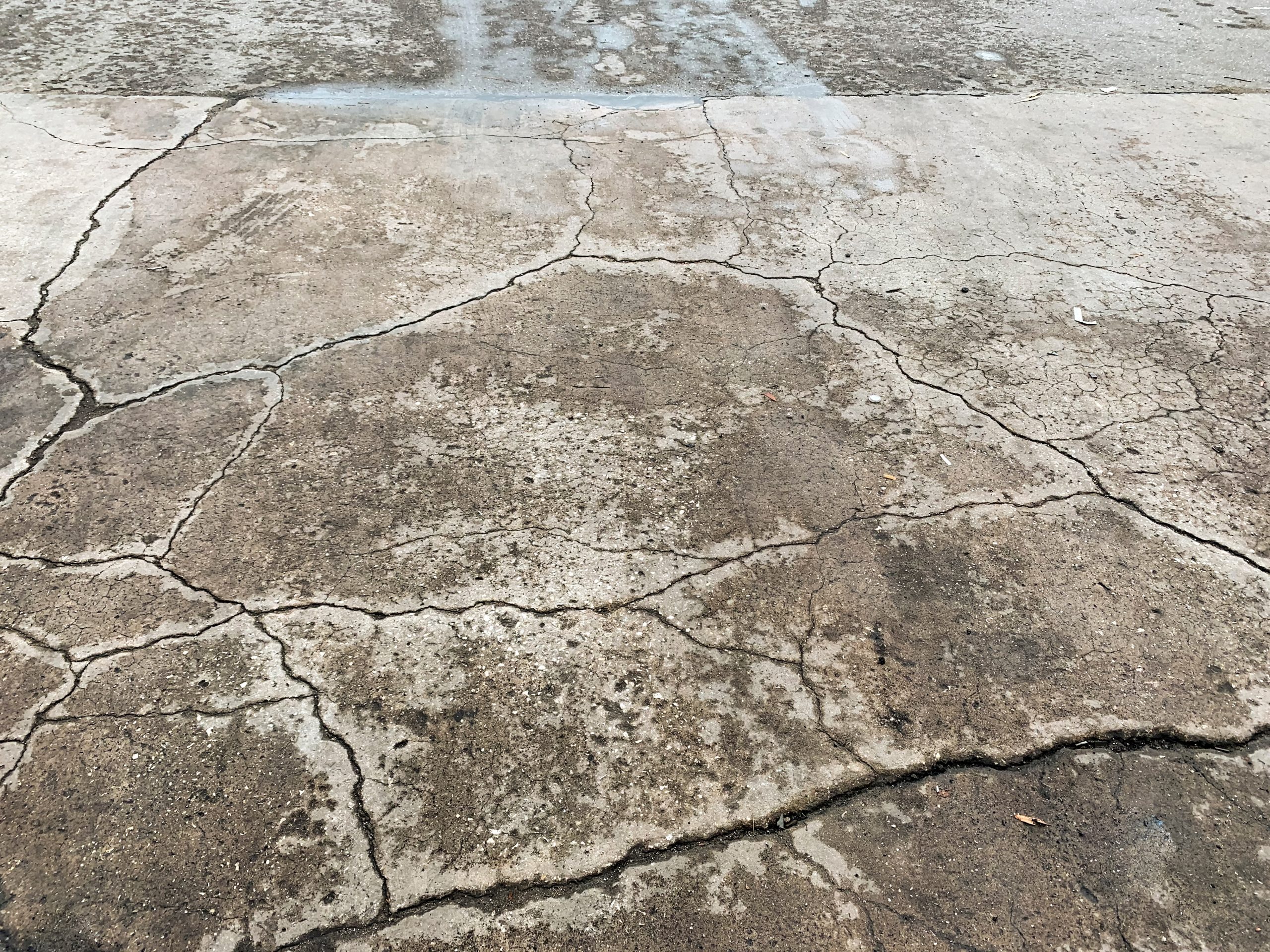
If you live in Southeast Wisconsin and you are seeing your driveway shed thin layers like fish scales, you are likely dealing with concrete spalling. The good news is that most flaking can be repaired if you act sooner rather than later. As a trusted Milwaukee contractor, Custom Concrete & Stone Design has helped homeowners and businesses bring worn driveways back to life for more than 30 years. In this guide, we explain the causes of flaking, how concrete slab repair works, and how to keep your driveway strong through every freeze and thaw.
What Causes Driveway Surface Flaking?
Flaking is usually a sign that the top layer of the slab is breaking down. In our climate, moisture finds its way into the surface, freezes, expands, and pushes off thin layers. This is known as freeze thaw damage. Deicing salts can speed up surface scaling as well. Workmanship and material choices also matter. If a slab was not mixed, finished, or cured correctly, the surface can be weaker and more likely to spall. Understanding what caused the problem helps you choose the right concrete slab repair plan.
- Freeze thaw cycles: Water soaks into the surface, then expands as it freezes. Repeated cycles pop off thin layers.
- Deicing chemicals: Rock salt and other chlorides pull moisture into the concrete and break down paste near the top.
- Poor finishing: Closing the surface too early traps bleed water. Overworking the top adds water and weakens it.
- Improper curing: If the slab dries too fast, the surface can be brittle and less durable.
- No air entrainment: In cold regions, a mix without proper air voids cannot handle freezing water well.
- High water content: Too much water in the mix lowers strength and increases porosity at the surface.
- Drainage problems: Gutters that dump on the driveway or low spots that hold water keep the slab wet longer.
- Age and wear: Heavy traffic, snowplows with metal edges, and aggressive pressure washing can erode paste.
- Contaminants: Oil, fertilizers, or acids can chemically attack the surface if left on the slab.
Is It Spalling, Scaling, Delamination, or Dusting?
Not all surface issues are the same. Identifying what you are seeing helps you pick the right fix. Custom Concrete & Stone Design starts every project with a careful inspection to pinpoint the exact cause before we recommend a solution.
- Spalling: Thin chips or flakes pop off in patches. You may see aggregate peeking through. Common after winters.
- Scaling: A uniform loss of the top surface over a wider area. Often linked to deicers and freeze thaw cycles.
- Delamination: A hollow sounding skin separates from the slab below. This happens when finishers seal in bleed water. Tapping can reveal a drummy sound.
- Dusting: A chalky, powdery surface that wears off under traffic. Usually due to weak or undercured paste.
- Pitting: Small round holes from salt attack or air pockets. Can be paired with scaling or spalling.
Why Flaking Gets Worse if You Wait
Thin flakes might look like only a cosmetic problem, but the damage can escalate fast. Exposed pores absorb more water, which means more freeze thaw pressure. Chlorides can travel deeper and reach rebar or mesh, leading to corrosion and rust jacking. The surface becomes rough and slippery when wet or icy, which can be a safety risk. Minor repairs cost less and last longer when addressed early. If you wait until aggregate is widely exposed or sections are breaking loose, you may face more extensive concrete slab repair or even full replacement.
DIY or Professional Concrete Slab Repair?
Small, shallow areas can be handled by a careful homeowner with the right materials and prep. Bigger or deeper damage, delamination, or drainage issues are best left to professionals. Successful repairs are all about surface preparation, bonding, and proper curing. If any of these are missed, the patch or overlay can fail and peel.
- Good candidates for DIY: Light flaking under 1 16 inch deep, small areas under 30 square feet, no hollow sounding zones, no ongoing settlement or drainage issues.
- Call a pro: Widespread scaling, delamination that sounds hollow, exposed reinforcement, movement or settlement, freeze thaw damage on new concrete, or recurring problems after past repairs. Custom Concrete & Stone Design can inspect your slab, test for moisture and delamination, and provide a plan that lasts.
Step by Step: How Pros Repair a Flaking Driveway Surface
There is no single fix for every driveway. We tailor our approach to the type and severity of damage. Below is a typical process our team follows for durable concrete slab repair on flaking or scaled driveways.
- Inspection and testing: We map damaged areas, tap test for delamination, and check moisture. We also look at drainage, joints, and downspouts.
- Choose the repair path: For shallow spalling, we often use a polymer modified resurfacer. For deeper sections, we perform partial depth repairs or patching. Severe or structurally unsound slabs may require replacement.
- Cleaning and degreasing: We remove oil and contaminants with cleaners approved for concrete. Stubborn stains may need repeated treatment.
- Mechanical surface prep: We shot blast or diamond grind to open pores, remove weak paste, and create a uniform profile for bonding. This step is critical to long term results.
- Edge trimming and feathering: We cut clean edges around damaged zones and avoid feather edges thinner than the product allows. This keeps the repair from chipping later.
- Crack routing and filling: Active cracks are routed and filled with flexible sealants or repair mortars that match movement needs.
- Reinforcement treatment: If steel is exposed, we clean rust and apply a corrosion inhibitor or protective coating before patching.
- Bonding primer: We apply a manufacturer approved bonding agent to help the new material grip the prepared surface.
- Patch or resurface: We place a polymer modified repair mortar or a microtopping. For wider areas, a full resurfacing layer can restore a clean, uniform look and slip resistant texture.
- Texturing and finishing: We broom or texture to match the existing driveway and improve traction for winter use.
- Curing: We protect repairs from rapid drying and temperature swings. Proper curing delivers a stronger, longer lasting surface.
- Sealing: After the repair cures, we apply a breathable penetrating sealer, often silane or siloxane based, to resist water and chloride intrusion without trapping moisture.
- Joint maintenance: We clean and reseal control joints so water does not seep into the slab from above.
Most resurfacing projects take one to two days of active work plus curing time. With good curing and weather, a driveway can often be ready for foot traffic within a day and light vehicle traffic in several days, depending on the product used and temperature.
Full Depth Solutions When Surface Repair Is Not Enough
In some cases, flaking is a sign of deeper issues. If a slab is delaminated across large areas, has low overall strength, or is settling, full depth removal and replacement may be the best long term choice. Our crew can remove the damaged slab, improve the base, and pour new air entrained concrete with the correct mix design for Wisconsin winters. If your slab has settled but is otherwise sound, slabjacking or polyurethane foam injection can lift it back to level. We often pair lifting with joint sealing and surface sealing to control future water intrusion. Drainage improvements like gutter extensions and regrading help keep water away from the driveway and foundation.
How to Prevent Future Flaking on Your Driveway
Prevention starts with good design and continues with simple yearly habits. The following tips can help your repair last longer and keep new concrete looking great.
- Use the right mix: Air entrained concrete with a proper water cement ratio improves freeze thaw durability.
- Finish correctly: Do not add water to the surface. Delay finishing until bleed water has evaporated. Avoid overworking the top.
- Proper curing: Use curing compounds or wet curing methods to protect the surface in the first week.
- Seal regularly: Apply a breathable penetrating sealer every two to three years, or as recommended, to resist water and salt.
- Skip salt the first winter: New concrete is more vulnerable in its first season. Use sand or calcium magnesium acetate instead of rock salt.
- Shovel smart: Use plastic shovels or snow blowers with rubber edged paddles. Avoid metal blades that scrape the surface.
- Manage water: Add gutter extensions, fix low spots, and keep the driveway clear of standing water.
- Clean spills: Promptly remove oil, fertilizer, and other chemicals that can harm concrete.
- Gentle washing: If you pressure wash, stay under about 2500 psi with a wide fan tip, and keep the nozzle moving.
- Maintain joints: Keep control and expansion joints clean and sealed so water does not travel into the slab.
Timeline and Costs You Can Expect in Southeast Wisconsin
Every driveway is different, so an in person evaluation is the best way to estimate cost. That said, it helps to have general ranges. Weather and scheduling in Milwaukee, Waukesha, Ozaukee, Washington, Racine, and Kenosha counties can affect timing. Custom Concrete & Stone Design aims to complete most surface repair projects within one week from start to finish, including curing.
- Resurfacing light flaking: Often the most budget friendly option when the base concrete is sound. Pricing is typically per square foot and depends on prep needs and product selection.
- Partial depth repairs and patching: Costs vary by number of areas and depth. This option targets the worst spots without covering the entire slab.
- Joint cleaning and sealing: A small cost that pays off by limiting water entry and freeze thaw damage.
- Slabjacking or foam lifting: Priced by size and number of lift points. Useful if you have settlement but a solid surface.
- Full replacement: Highest cost but best for severely deteriorated or undersized slabs. Includes removal, base prep, and a new pour with proper air entrainment and joints.
During your consultation, we will discuss your goals, provide clear options, and back our recommendations with the reasons why. You will get a straightforward proposal, timeline, and care guidelines to make your investment last.
Why Homeowners Choose Custom Concrete & Stone Design
Custom Concrete & Stone Design is a Milwaukee based company with more than 30 years of experience delivering high quality residential and commercial concrete across Southeast Wisconsin. Our team pours and repairs stamped concrete, driveways, patios, retaining walls, garages, basements, and foundations. We serve Milwaukee, Waukesha, Ozaukee, Washington, Racine, and Kenosha counties. When it comes to concrete slab repair, we combine skilled craftsmanship with proven materials that stand up to our winter climate. We tailor each solution to your property, whether that means a targeted patch, a full resurfacing, or a complete replacement. Our commitment is simple. Use top quality materials, do the prep right, and deliver a clean, safe, good looking surface. From your first call to the final walkthrough, we keep communication clear and the site tidy so you can feel confident in the result.
Frequently Asked Questions About Concrete Slab Repair and Driveway Spalling
Will sealing stop my driveway from flaking?
Sealing will not reverse damage that has already happened, but it will help slow future deterioration by reducing water and salt absorption. After proper concrete slab repair or resurfacing, a breathable penetrating sealer is one of the best defenses against freeze thaw cycles. Custom Concrete & Stone Design typically recommends silane or siloxane based sealers that allow vapor to escape while blocking liquid water.
Can I resurface in cold weather?
Repair materials and overlays need the right temperature window to cure correctly. Most products prefer air and surface temperatures above 50 degrees during application and for at least 24 hours after. Spring through early fall is ideal in Southeast Wisconsin. In cooler seasons, cold weather mixes and heated tents can help, but timing matters. We will schedule your project for conditions that support a durable cure.
Is pressure washing safe on a repaired surface?
It can be safe if done carefully. Use a wide fan tip, keep the nozzle moving, and avoid getting too close. Very high pressure can erode paste and open pores, which invites water and salt. When in doubt, a garden hose, a soft brush, and a mild cleaner will protect the surface better than aggressive washing.
How long will a repair last?
With the right prep, quality materials, and regular sealing, a resurfaced or repaired driveway can perform well for many years. Lifespan depends on traffic, deicer use, and maintenance, but it is common to see 7 to 15 years or more from a professional repair under normal home use. Full replacement with the right mix and curing can last decades.
What about stamped or decorative concrete?
Decorative driveways can also scale or spall, especially if deicers are used. Repairs need color matching and texture care. Our team can blend polymer modified overlays and color hardeners to revive the look while restoring durability. We also apply high quality sealers that protect color without making the surface slippery.
Ready to Restore Your Driveway?
If your concrete driveway is flaking in thin layers, now is the best time to act. A fast, expert assessment can save you from larger repairs later. Custom Concrete & Stone Design offers prompt inspections and straightforward plans for concrete slab repair, resurfacing, lifting, or replacement throughout Milwaukee, Waukesha, Ozaukee, Washington, Racine, and Kenosha. We will explain the cause of the flaking, outline options that fit your budget, and deliver a finish that stands up to Wisconsin winters. Contact us today to book your inspection and get your driveway looking and performing its best.